
Personaggi di South Park: rendere facili da leggere le piccole illustrazioni
Rendi più facili da leggere le illustrazioni cartoon compatte con 12 profili dei personaggi di South Park, indicazioni sul ritaglio e consigli sui dettagli che restano utili a dimensioni ridotte.
Novità in questa pagina
- — Articolo pubblicato.

Small illustrations need a clear hierarchy. The viewer usually sees the largest shape and color before noticing a button, a letter, or a facial detail. South Park characters are useful references because many remain recognizable through a hat, hair outline, or coat, even when the image has little room to explain itself. For a character designed for a small illustration, try South Park Character Creator.
This guide presents artwork collected from the South Park Public Library and examines what should remain visible in a compact illustration. It is a fan reference and a design study.
Start with the details that survive reduction
Imagine a character image on a small social card. The main clothing color may remain clear while a pocket seam becomes difficult to see. The hat outline may survive while a mouth loses detail. Choose a composition whose larger features identify the subject, then use the caption to explain anything too small to carry the message alone.
Eric Cartman
Cartman's broad red jacket is a large recognition cue, supported by the turquoise cap and yellow accents. The wider outline should remain visible even in a compact image. A tight face crop may preserve the cap but remove the body shape, so it serves a different identification purpose.
Kyle Broflovski
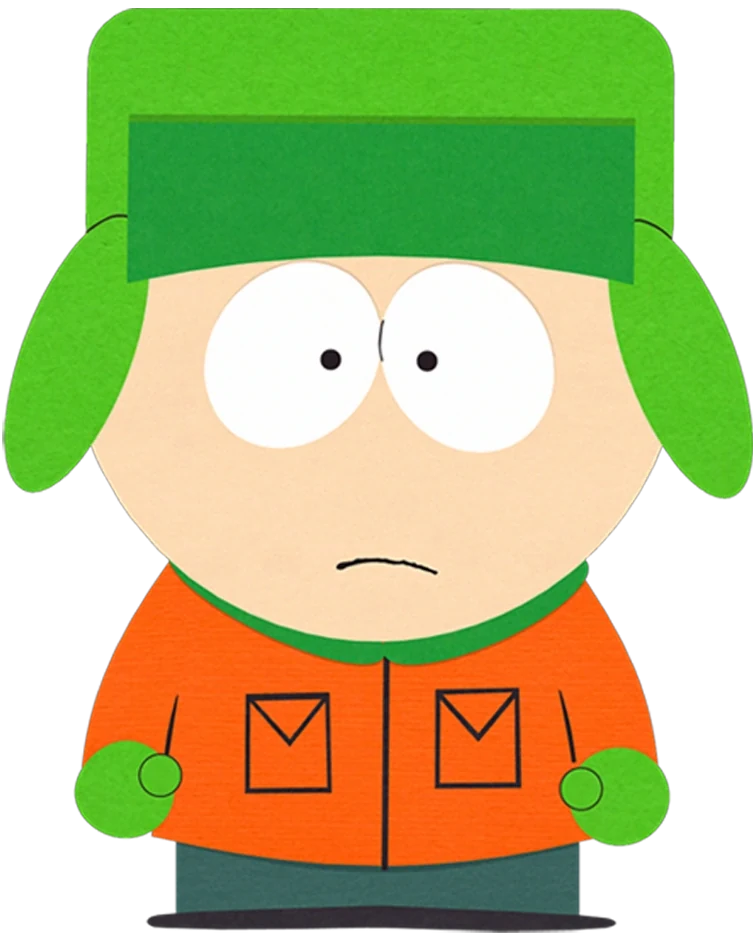
Kyle's green earflap hat and orange coat create two large blocks. The flaps alter the head outline and deserve enough space around the face. Small pockets can support a larger portrait, but the hat-and-coat arrangement is the stronger starting point when deciding whether a reduced image still reads.
Stan Marsh

Stan's blue cap has a red band and pom-pom, with red gloves below a brown jacket. The repeated red accent links different parts of the figure. Leave enough room above the cap so that reducing or cropping the image does not remove the little upper shape that helps identify him.
Kenny McCormick
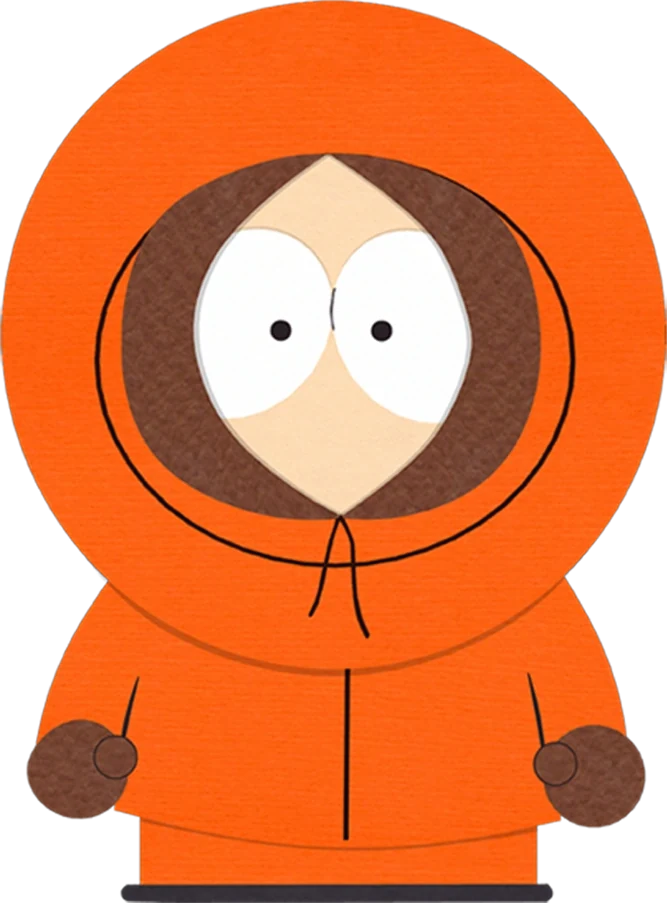
Kenny's orange hood surrounds a dark opening and a small visible face. The hood's large outer shape is important at compact sizes. If the face opening becomes indistinct, simply enlarging the eyes may not help; preserve the relationship between the orange enclosure and its darker interior.
Hair volume is larger information than hair texture
Wendy Testaburger
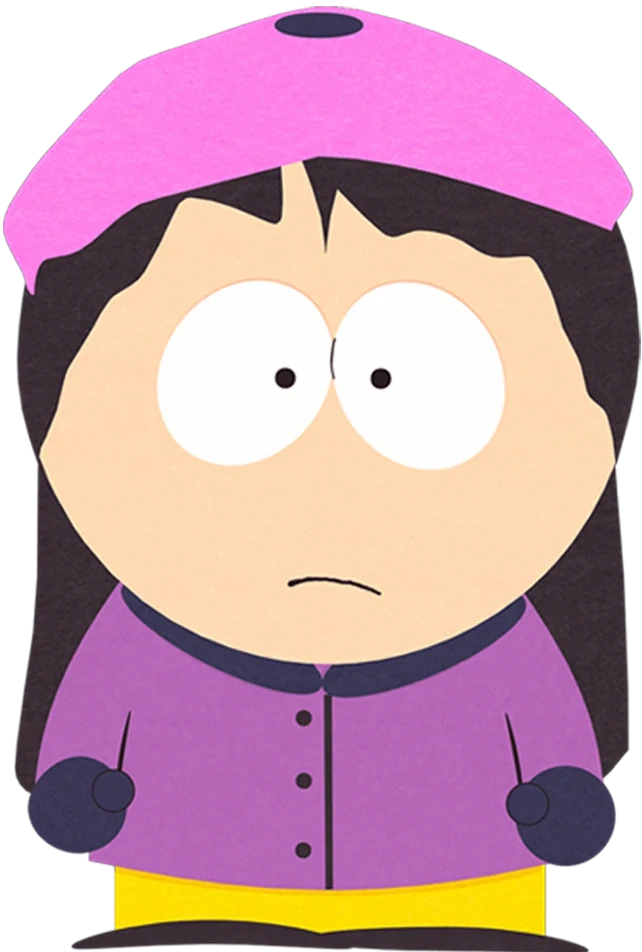
Wendy's long dark hair frames the purple jacket, with a pink beret at the top. The overall length and border matter more than individual hair details in a small image. A useful caption can name the beret and coat, while the picture keeps their placement and the hair outline clear.
Bebe Stevens
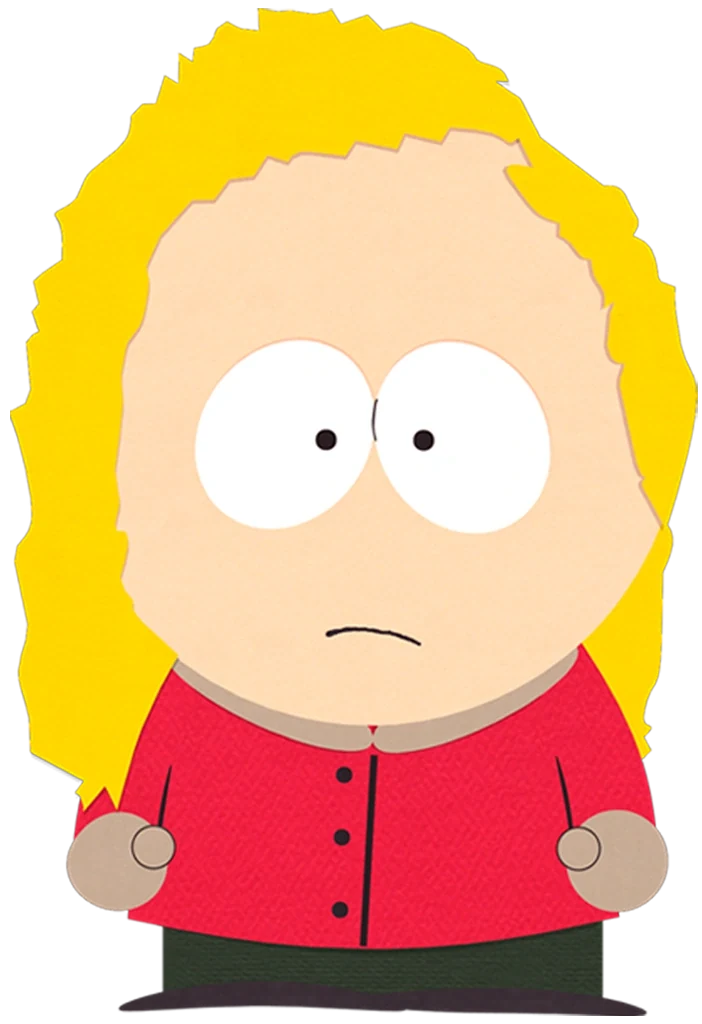
Bebe's blond hair forms a fuller area around the head and shoulders, above a red top. Its volume distinguishes the portrait even without fine strands. Compare it with Wendy's darker, longer outline to see how the same simple eye construction can sit inside very different surrounding shapes.
Butters Stotch
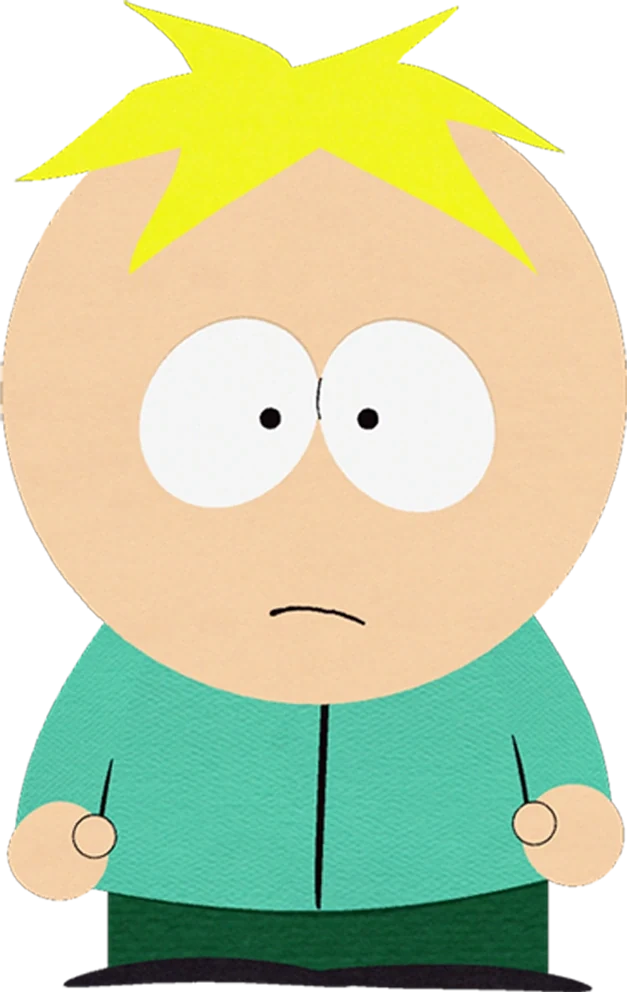
Butters' small pointed blond tuft and turquoise shirt form a more compact design. In a reference card, give the tuft enough separation from the background to remain visible. His portrait does not need extra decorative objects to explain the outline, so a clean arrangement can preserve its strongest information.
Tweek Tweak
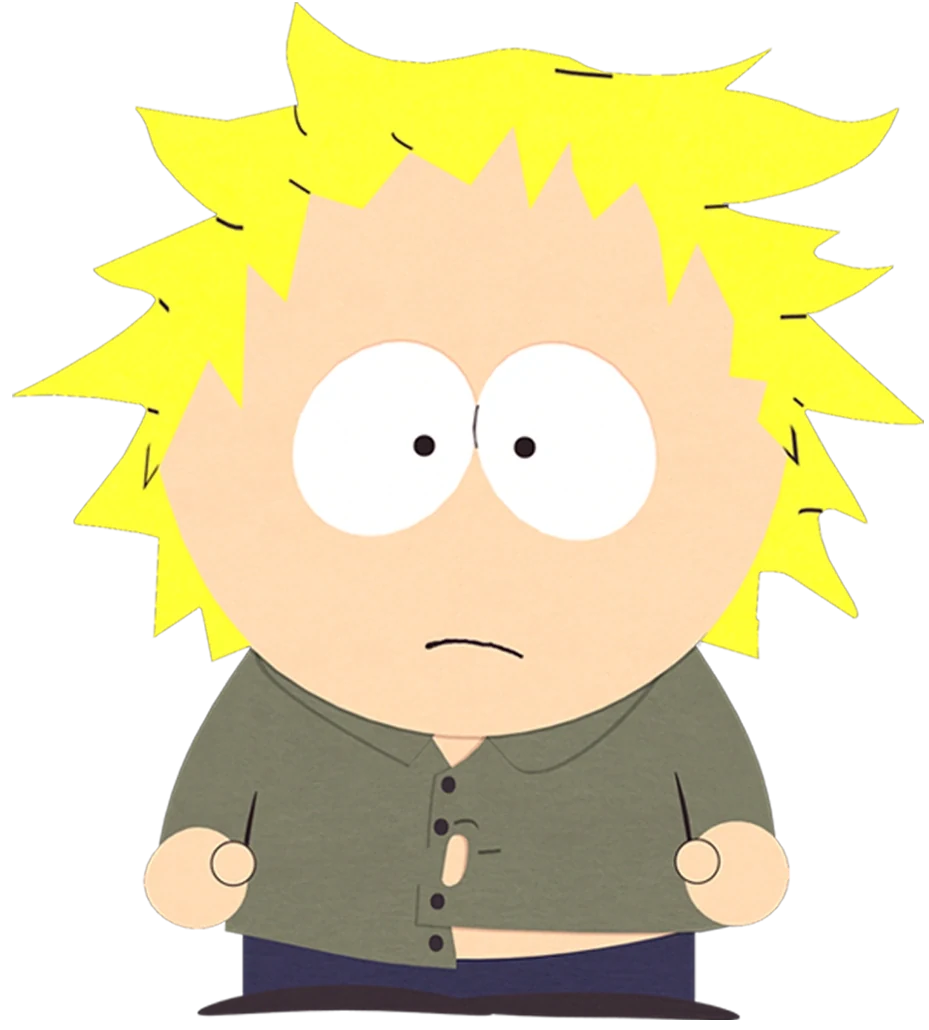
Tweek's blond hair extends outward in several irregular points. The olive shirt closes unevenly, but that smaller detail may be less obvious after reduction. Prioritize the hair contour and main garment color when considering a thumbnail, then include the shirt detail in a larger explanatory image.
Some recognition clues need a wider frame
Craig Tucker

Craig's blue coat and earflap hat share a dominant color. A yellow pom-pom adds a small contrast. The outline distinguishes the hat from an ordinary cap, so leave the side flaps visible. The complete blue arrangement also helps separate him from Kyle's green-and-orange clothing combination.
Tolkien Black
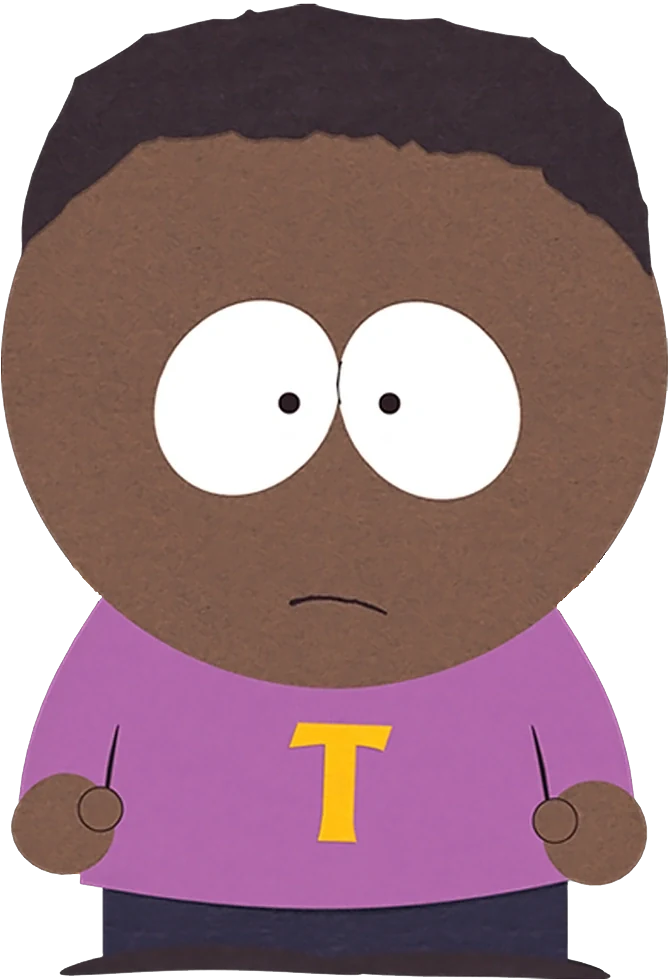
Tolkien's purple shirt includes a yellow T, which is much smaller than the shirt itself. Do not depend on the letter alone to identify a tiny portrait. The dark hair shape and larger purple area provide more visible context, while the caption can give his full name clearly.
Jimmy Valmer

Jimmy's yellow shirt and crutches need enough room to show their full arrangement. A small headshot may identify his face, but it cannot explain the full-body pose. Choose a larger or wider frame if the image is intended as a character reference rather than a simple named icon.
Timmy Burch
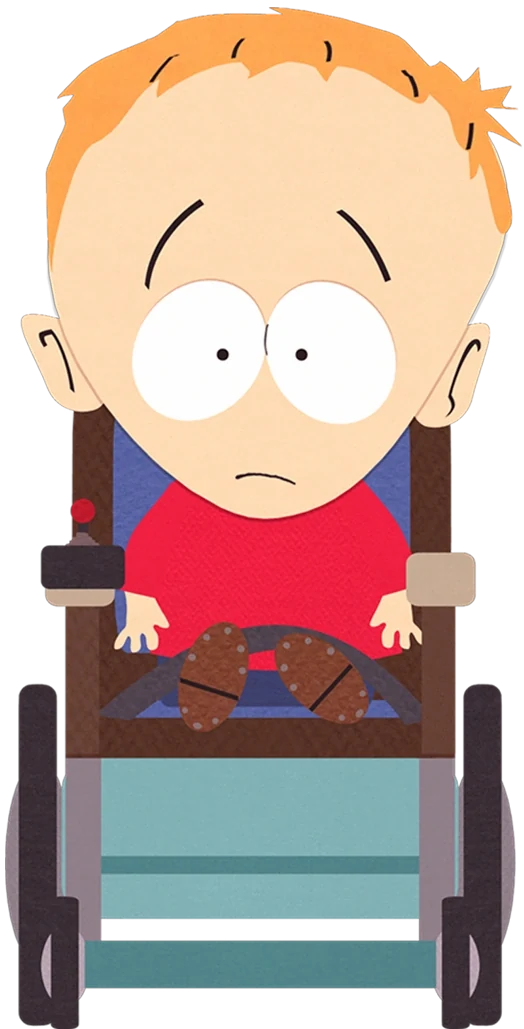
Timmy's wheelchair surrounds the seated figure and changes the image's footprint. The red shirt is one part of that composition. A compact illustration still needs to preserve the relationship among body, wheels, and lower chair structure if it is meant to show the full character accurately.
Review the image at its intended size
Do not judge a thumbnail only from a large preview. Open a draft at the size where readers will encounter it and ask what you notice first. If the background grabs attention before the figure, simplify the surrounding area. If the identifying accessory disappears, change the framing before adding more decorative detail.
For an original character, choose one dominant color, a distinct head shape, and one useful prop. A bookshop assistant might wear a plum coat and a cream knit cap, carrying one blue book. Those choices can still be understood when the figure is small. A tiny name tag, several necklaces, and intricate shoe patterns would add information that may not survive.
This is a composition proposal, not a tested prompt. A South Park character creator brief can borrow the principle of simple, readable shapes while giving the new person an original outfit. A South Park character maker description should also specify whether you need an icon, a full-body reference, or a scene. Each has a different information budget.
You can develop an illustration idea from the homepage, or browse the blog for other visual examples. Evaluate the actual result for legibility and composition; no set of prompt words removes the need to inspect the image where it will be used. Choose a bold outline and only the details that survive at a small size when you try South Park Character Creator.
Use the caption to carry the right information
A small picture should not carry every part of an explanation. Let it establish the subject and reserve the caption for a comparison or context. Tolkien's shirt color and hair outline can remain visible in a compact card, while a caption supplies his full name and explains the yellow T. That division makes the card useful without turning it into a dense diagram.
For an original illustration, choose a similarly limited message. A library assistant holding one blue book can communicate a role; a short caption can explain why the book matters. Adding several tiny labels inside the image may make the card less readable, particularly when shared at a smaller size. Keep important words outside the artwork where they can remain clear. Then inspect the image and caption together: each should contribute something, and neither should require the reader to decipher details that are too small to see.
Do not use an ordinary portrait to explain a gaming scene

South Park World of Warcraft refers to Make Love, Not Warcraft. The boys try to defeat a powerful player who keeps killing their game characters, following Cartman's plan to build up their strength. The story gives the cast a distinct episode appearance.
The computer-lab frame contains more information than a simple portrait: four figures, computers, signs, and the surrounding room. Familiar costume areas still help identify the boys despite their changed faces and bodies. Kyle's green hat and Kenny's orange hood are clear, while Cartman wears red without his usual cap.
Per una piccola illustrazione con il creatore di South Park, decidi se tutto quel contesto deve rimanere. Un ritratto standard di Cartman di South Park è adatto a una scheda di identificazione compatta. Questa immagine dell'episodio richiede più spazio se la stanza e l'attività condivisa fanno parte della spiegazione. Per sviluppare un personaggio pensato per una piccola illustrazione, prova South Park Character Creator.